-
Design system interviews

With more than a decade of experience each, we explore how design systems will work tomorrow… Read Full Article
-
Product comparison UX

It’s very difficult to properly compare spec-driven products in product lists. Comparison features make it much easier to compare many specs across multiple products. Read Full Article
-
The realities and myths of contrast and color
In this article, Andrew Somers, a 35-year veteran of the Hollywood film and television industry, shares his experience about the hard-fought battles and lessons learned designing for illuminated presentations. Read Full Article
-
A designer’s balancing act

Carly shows us her strategy to ensure Figma files are set up for exploring freeform designs while also creating space for collaboration and clarity. Read Full Article
-
Exploring the Images Used to Train Stable Diffusion’s Image Generator
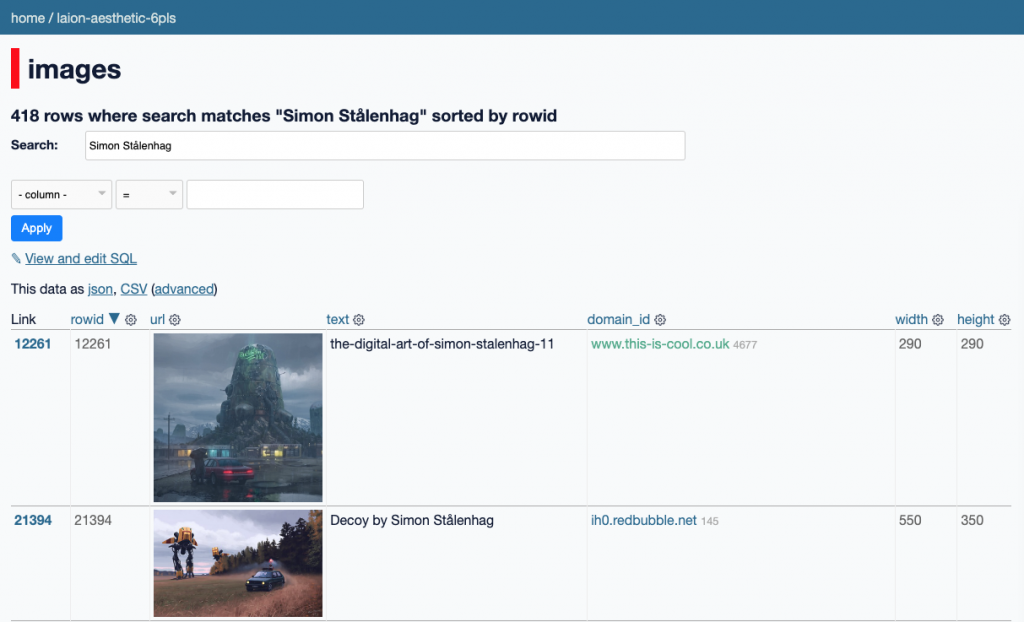
What images were used to train Stable Diffusion’s text-to-image AI model? I worked with Simon Willison to make a data browser to explore and search a sample of 12 million images. Read Full Article
-
Infinite Scrolling: When to Use It, When to Avoid It

Infinite scrolling minimizes interaction costs and increases user engagement, but it isn’t a good fit for every website. For some, pagination or a Load More button will be a better solution. Read Full Article
-
So your designer wants stuff to overlap

I started my first full-time web developer job back in September of 2013 (not counting the period where I built random sites for random people). Read Full Article
-
Stable Diffusion is the most important AI art model ever

A state-of-the-art AI model available for everyone through a safety-centric open-source license is unheard of. Read Full Article
-
UX analysis of HBO Max

HBO Max suffers from poor UX judgement, a lack of finesse and a focus on style over function. Let’s learn from their mistakes, only on Built for Mars. Read Full Article
-
Five areas Figma need to improve on to stay a step ahead

Figma are dominating the product design tools space, but here are five areas I think they need to work on to maintain their market lead. Read Full Article